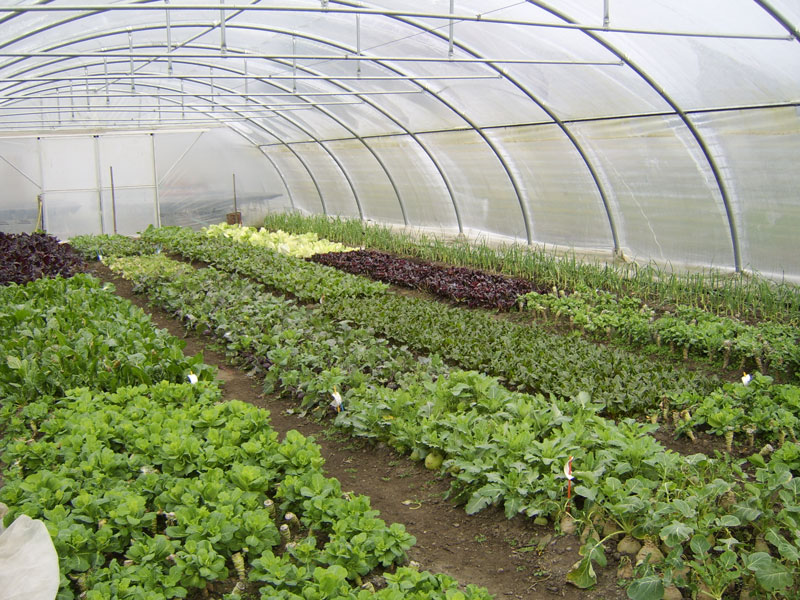
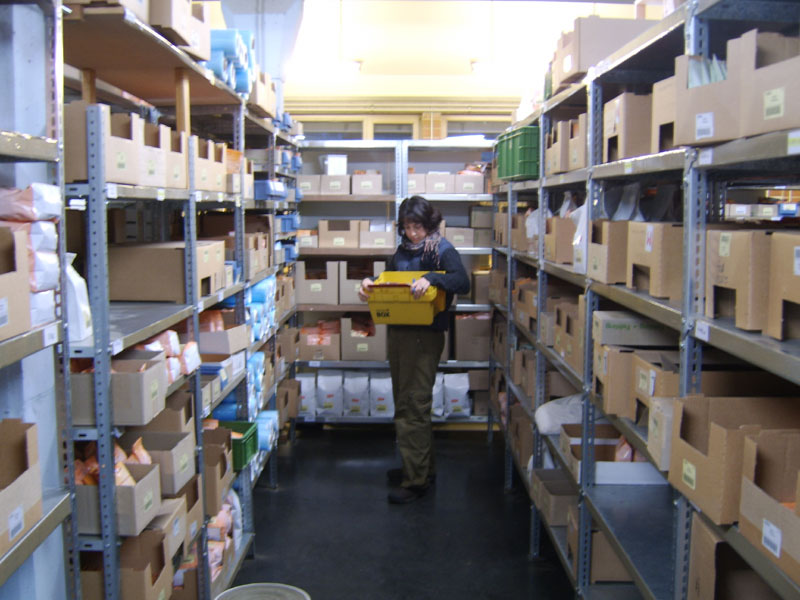
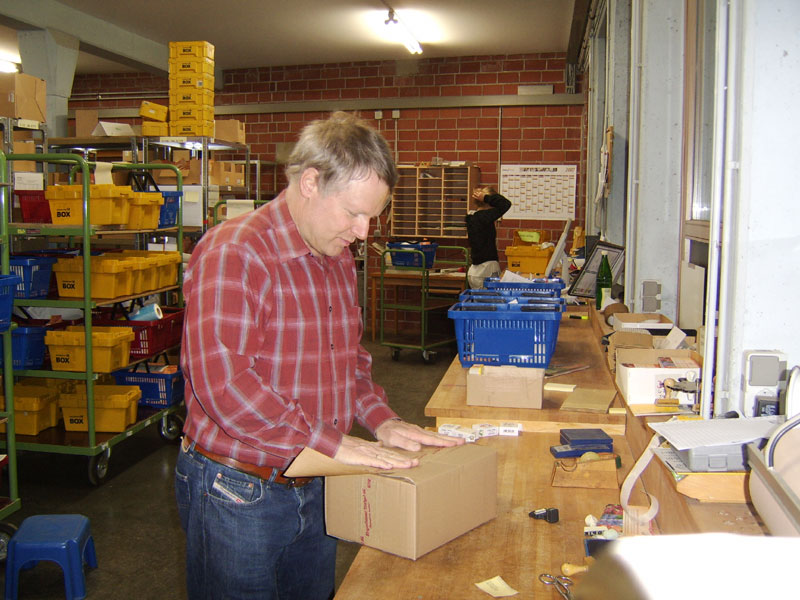
From Switzerland we traveled back north up to Germany for a visit with Ulla Grall of Bio-Saatgut. The name of her company says it all: “Organic Seeds”. Ulla offers through her catalog seeds that she produces herself and those grown by several small contract growers, as well as seeds from Sativa Rheinau and a French seed company called Ferme de Sainte Marthe. Ulla told us she wants to grow more of her own seed herself, but also takes pride in the fact that she offers seeds from two other countries. Because of the EU seed laws it is difficult for many people to order seeds from other countries, or they simply don’t think of it as an option. Through her seed company, Ulla offers many varieties that would otherwise be unavailable to German gardeners.
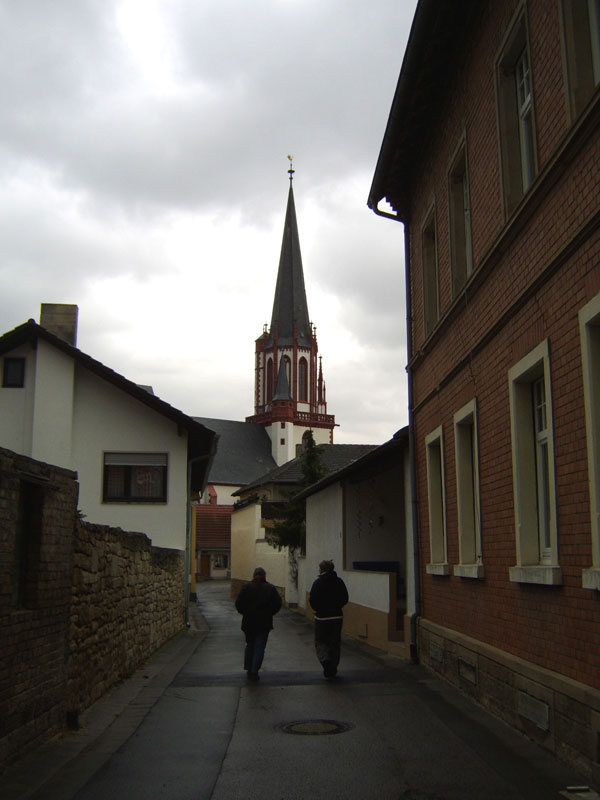
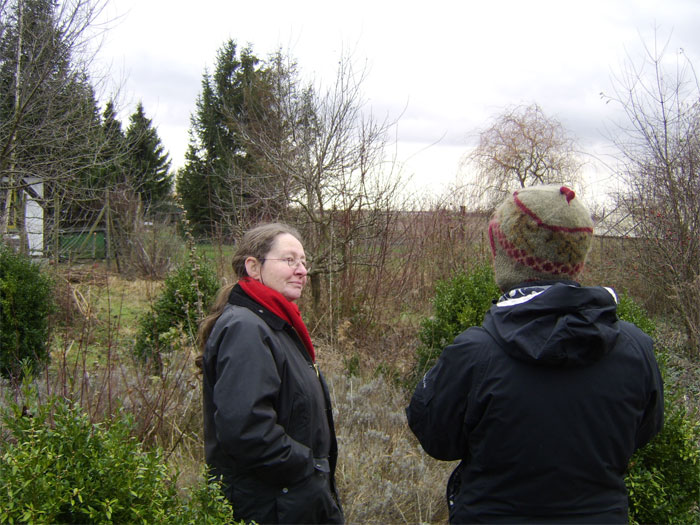
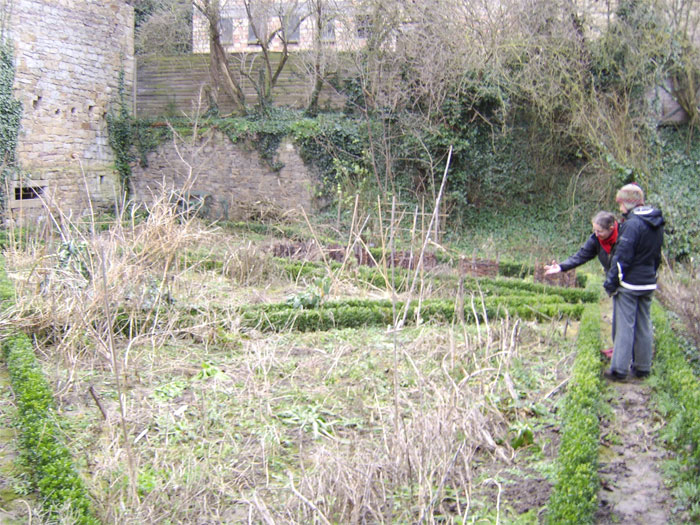
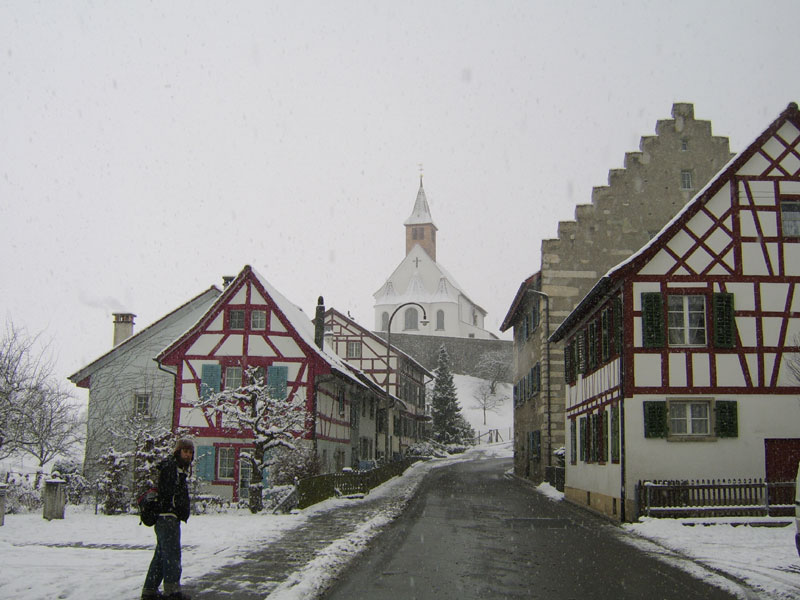
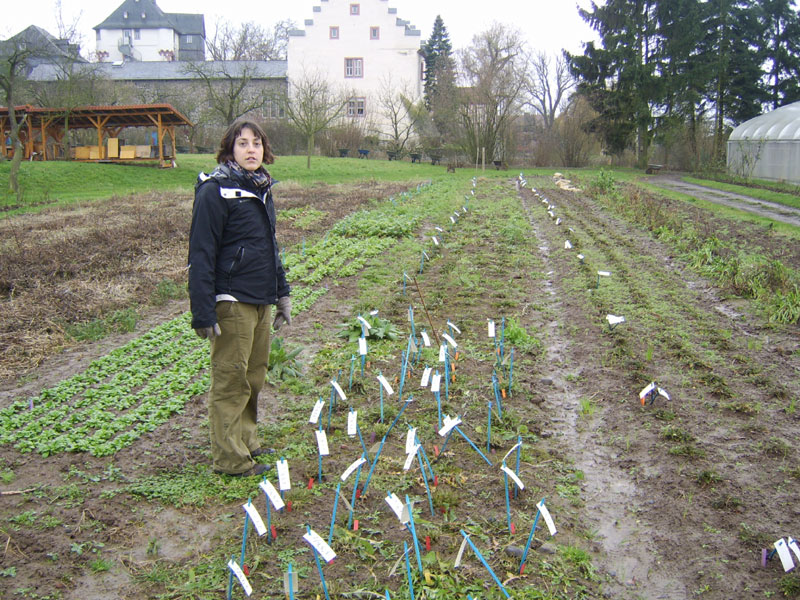
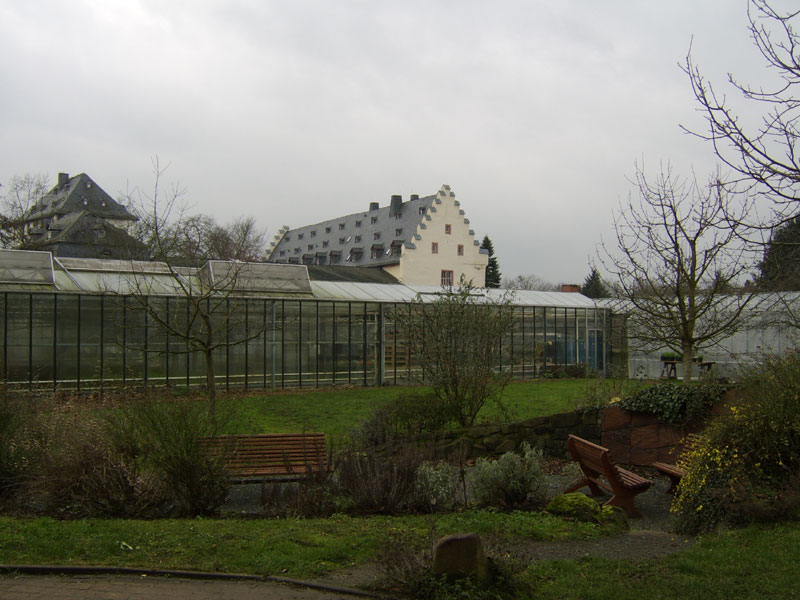
R to L: On the streets of Armsheim, Ulla grall in her garden, more of her gardens.
Ulla became involved in seeds initially as a translator and marketer for Ferme de Sainte Marthe in Germany more than a decade ago when the company was trying to expand into the German market. After Ferme abandoned this project, Ulla took on selling some of their varieties personally. What began as a small mail order resale company has since blossomed into one of the only independent organically certified seed companies in Germany.
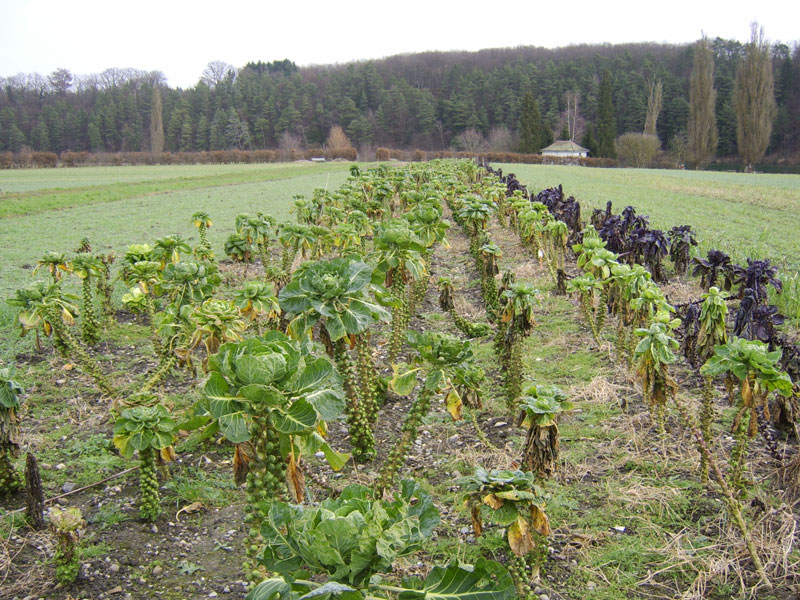
The folks at Sativa do a lot of work with maintaining and reinvigorating old varieties for PSR. (Pro Specie Rara, the Swiss seed saver’s organization, see next posting). Most of this work focuses on brassicas, which often suffer from inbreeding depressions, leading to sickly plants and poor yields. By the time inbreeding depression is recognized it is often too late: one cannot simply grow out a large population of the line and save seeds, as the genetics have been bottlenecked by previous small populations (e.g. a home gardener saving seed from too few plants). The only glimmer of hope is to locate other lines of the same variety and cross the lines together — and this is exactly what Friedemann, the vegetable breeder at Sativa, is doing.
The prime example of this tragic condition is found in the red Brussels sprout variety known as Rubine, still carried by many seed companies throughout Europe and the United States. Rubine has declined over the past several decades and now often fails to produce anything resembling Brussels sprouts. Friedemann recently acquired Rubine from six different sources throughout Europe, with plans to let them all flower together in the hopes that the different lines will bring enough genetics together to reinvigorate the variety — hopefully to the point of producing healthy plants that will produce large sprouts. If this cannot be achieved, he said he will begin work to develop a new red Brussels sprout variety.
Sativa is also involved in Biodynamic breeding projects of a completely different sort than Ute Kirchgasse and Christina Henatsch (see previous posts). Friedemann came to biodynamic vegetable breeding from quite the opposite direction of Christina and Ute. His training and experience is not Anthroposophical, but rather he worked as a vegetable breeder at Hild, a conventional seed company.
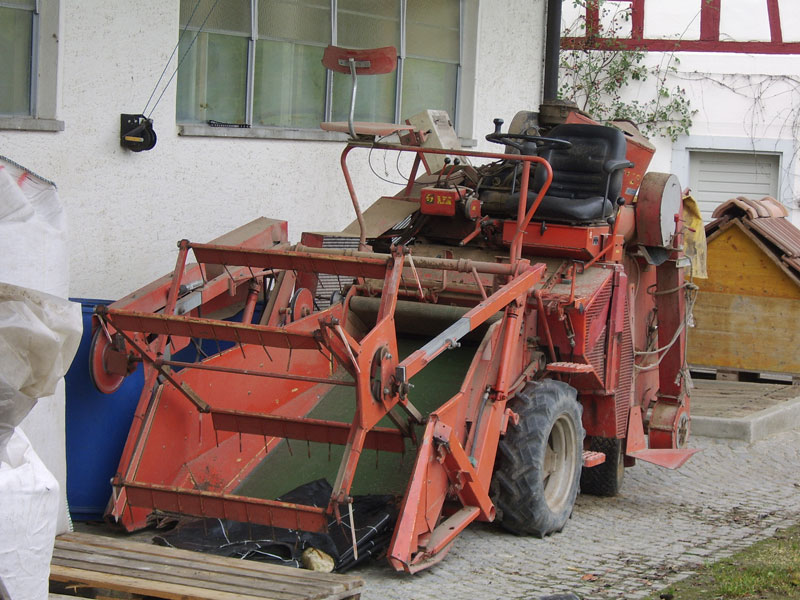
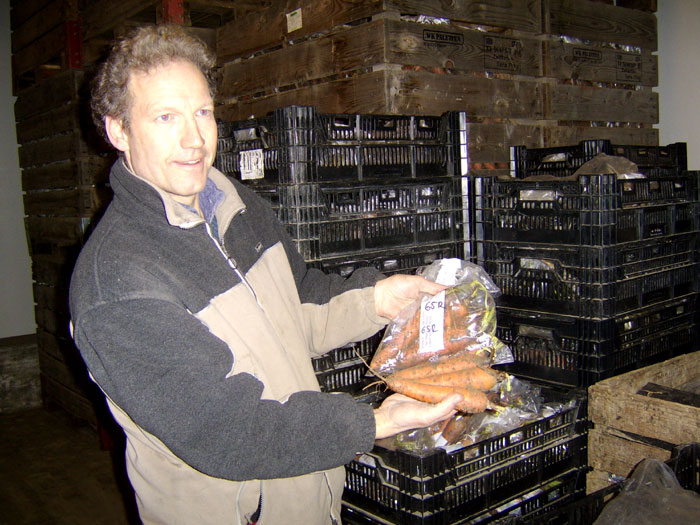
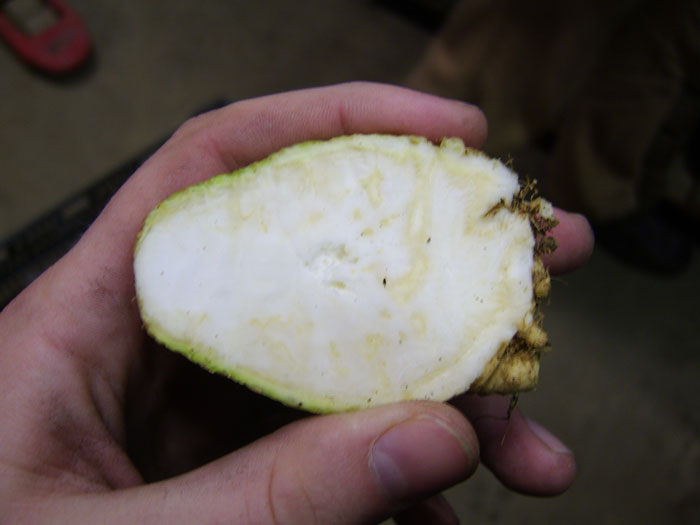
breeder Friedemann, celeriac inspection, snow at Sativa.
It follows, then, that Friedermann has a different approach. In contrast to most of the Biodynamic community, he doesn’t see any problem with the wise use of F1 hybrids for breeding (unless these hybrids are geneticly engineered CMS hybrids). Friedemann doesn’t create hybrid varieties for sale or distribution, but acquires them from other seed companies and then uses these varieties as breeding material. He believes the organic/biodynamic community should utilize the genetic resources and hard work of the conventional community, just as the large seed compaines use the resources of the open-pollinated community in the creation of their hybrids.
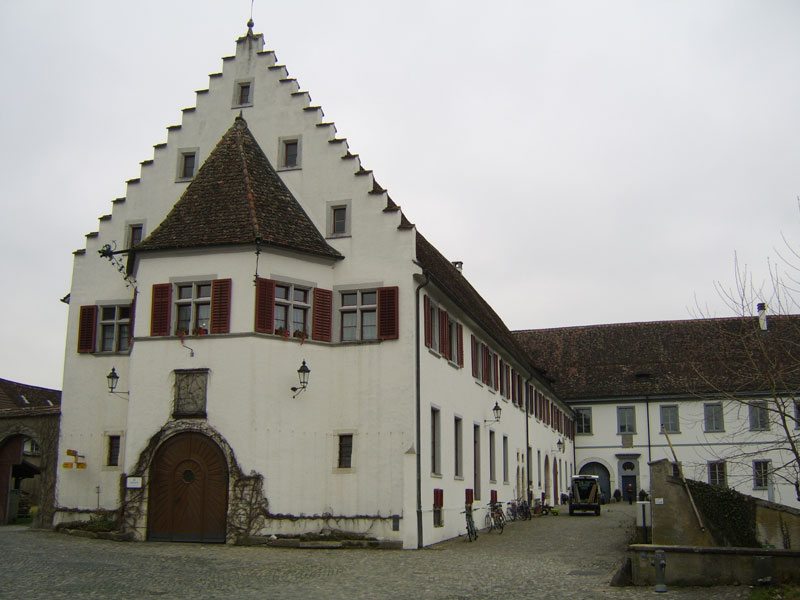
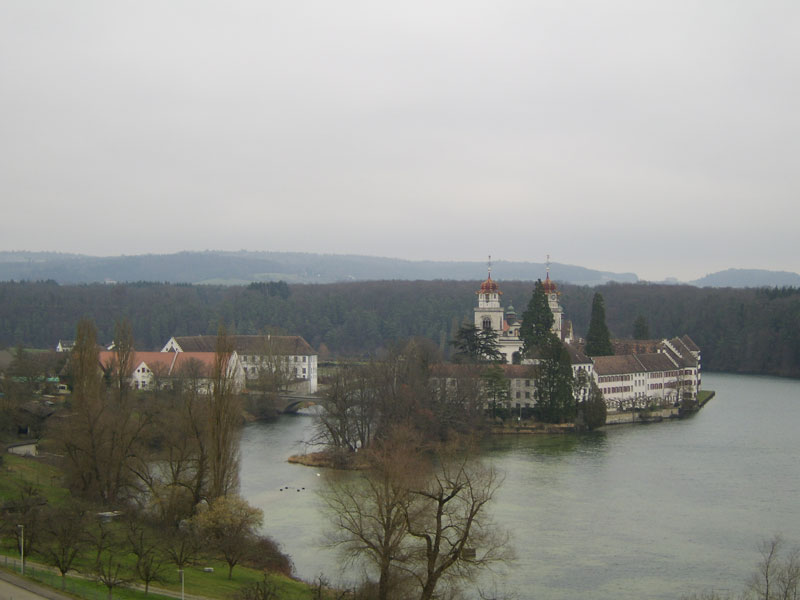
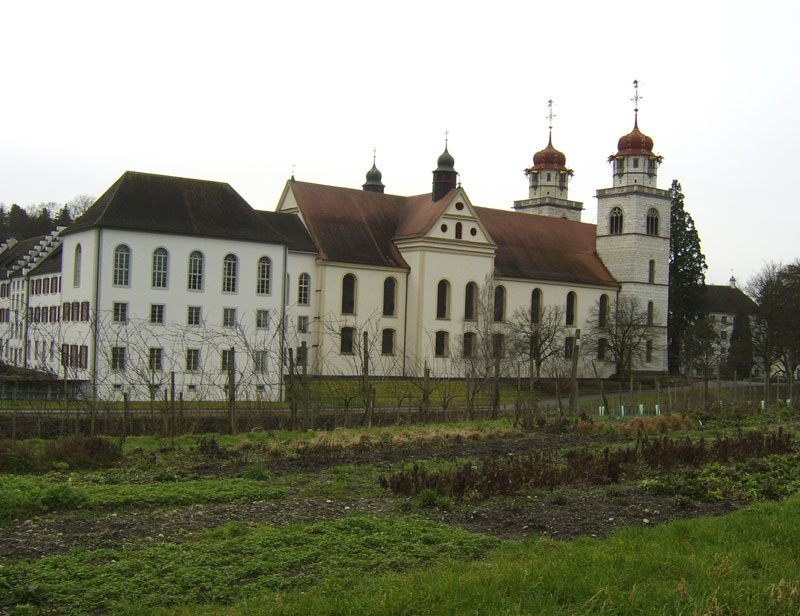
From Gerhard and Susanne’s we traveled by train south to Sativa Rheinau, a biodynamic seed company in Switzerland near the border town of Schaffhausen, home to the largest waterfall in Europe. Set in a seventeenth century monastery on an island in the Rheine, Sativa is blessed with being one of the most beautiful places we have happened across in our travels. The seed company at Sativa is part of a larger Biodynamic farm project that integrates 25 handicapped people into the work with animals (dairy and meat), fruits, vineyard, grains, and seed growing and processing tasks.
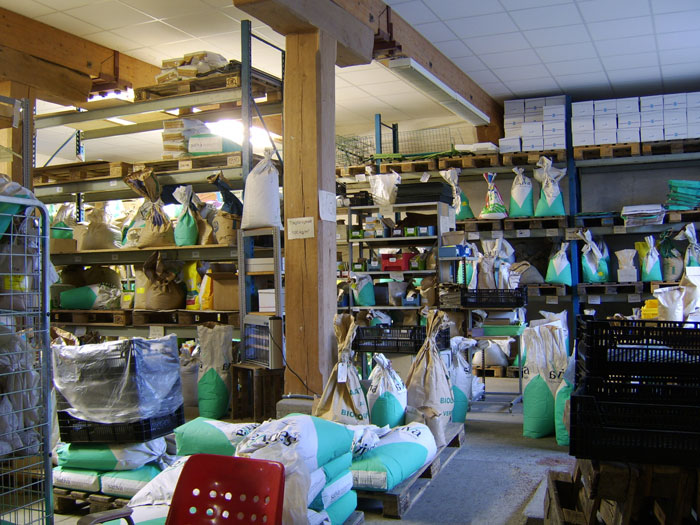
falls on the Rhine, Sativa HQ, seed room
Sativa’s main vegetable seed customers are home gardeners, and they work closely with Pro Specie Rara (PSR) to distribute heirloom Swiss varieties. (More about PSR, the Swiss seed savers group, in a later posting). Sativa’s main work with farmers is in their work with seed potatoes and grains, and they sell large quantities of rye, spelt, and wheat to farmers there. Because Switzerland is not part of the EU, they do not have the restrictions of most other countries in regards to the Common Catalog. But this does not mean that they do not have to deal with limitations; as is the case in the US, high quality open-pollinated varieties for market gardeners are either nonexistent or are hard to come by.
Bingenheimer’s resident plant breeder, Ute Kirchgaesser, is on to something. Really, she’s probably on to many things, but to describe them all would take a book and I only have one blog posting.
Ute has what equates to a master’s degree in horticulture, but her German title sounds much better; Meistergartnerin. She got her start in plant breeding with a family run seed company where she learned the basics of traditional plant breeding, and has combined that knowledge with a more esoteric knowledge of an anthroposophical kind. All of these experiences combine to make her something more like and Ubermeistergarternerin if you ask me. But if you ask her, she is just a vegetable breeder.
Ute is working on developing a summer fennel. She is in the process of improving some leek varieties, and also is working to re-invigorate some old kales. She is in charge of the on-site seed production for Bingenheimer’s catalog. And she is also working on a project that even she can’t explain.
In 2002, she began to study what effect musical intervals have on plants. Previous studies have been done that show that plants respond well to classical music, and not so well to death metal. Ute wanted to know if a particular sequence of notes effects plants more than another, and she wanted to know if this effect can be seen in subsequent generations. She set up a research project working with some lettuces, which she surmised would show results quickly due to their rapid growth.
We left Greifswald for Bingenheimer Saatgut AG, the largest biodynamic seed company in Germany, Leaving super extra early on Tuesday morning, we traveled via “Mitfahrgelegenheit” through Berlin and on down to a small town northeast of Frankfurt. “Mitfahrgelegenheit” is the musical word for ‘organized rideshare’, and there are several websites that one can use to post rides wanted or rides offered. People in the US use Craigslist for this purpose, but in Germany the practice is more widespread and therefore more effective. Mitfahrgelegenheit costs about half as much as a train and can get you there twice as fast, and it is a good way to meet people. Since we traveled so far, we pieced together two rides and had a few hours to hang out in Berlin. We were delivered to the door of Bingenheimer, 13 hours after the start of our journey – not really twice as fast as the train but still half the cost!
We stayed, worked and learned with the kind folks at Bingenheimer for three work days, from Wednesday through Friday. This was our first visit with a seed company, and we learned a lot and had a really good time. Andrew was in heaven being surrounded by so many seeds, and the sense of community there really impressed me. But these are just two of the indicators that Bingenheimer Saatgut AG is not your average seed company. It is primarily Biodynamic. It is the hub for a network of 30 Biodynamic vegetable breeders in Germany. It was once part of and is still affiliated with the Lebensgemeinschaft Bingenheimer, a Camphill-esque community that fully integrates people with developmental disabilities into the tasks of daily life. As such, the Saatgut Werkstatt (seed workshop) is one of five workshops that employ disabled people in the community; they also rotate through candle making, woodworking, ceramics, and weaving workshops. Additionally, some of them work on the biodynamic dairy farm and others in the gardens, helping to grow food for the community and seed for the seed company. Continue reading