Attention Garden enthusiasts and Seed Savers,

4 important details:

1) Plant and Seed Swap
2) Sat March 20th 2:30-5pm
3) Westminster House (23rd and Monroe, Corvallis, OR)
4) FREE EVENT

This Seed Swap is being put on by the HOURS Exchange — Corvallis’ Community Currency group. In addition to the seed swap, they will be hosting a Market Event where people can buy and sell goods using the community currency. So not only do you get to swap some garden goodies to get your garden year started off right, you also get to see the local currency in action (and participate if you wish) in the indoor market.

How to participate:
- Bring your extra cuttings, bulbs, plant starts, etc. (Please label clearly – labels will also be available at the swap)
- Bring extra seeds (saved or what-not). You don’t have to pre-divide into small quantities
- Invite your fellow gardeners to bring their extras and enjoy the bounty (no need to be an HOURS member)
- Bring extra containers/grocery sacks or seed envelopes, as items may not already be divided
- Or just come ready to learn!

This will be held outdoors and organized to facilitate easy trades. We will be bringing will be plenty of seed so don’t worry if you have nothing to contribute. Wannabe gardeners are encouraged to attend.

Just to entice you, I know the following will be coming just from the HOURS organizers: chocolate mint starts, rosemary starts, marionberry starts, broccoli starts, amaranth seed, local barley seed, local wheat seed, etc.

What a great way to spread the wealth around! Any leftovers plants will be given to Lincoln K-8 School Garden, the Environmental Center’s SAGE Garden or to other charity groups.

No Comments on Mar 16th 2010

The Eugene Permaculture Guild’s big Spring Propagation Fair is coming up the second Saturday in March, the 13th, at Lane Community College. More details will follow on that one, but for those of you that don’t live within driving distance of Eugene, Oregon, here are a few tips for organizing your own Seed Swap. (Thanks to Kim in central Virginia for the e-mail prompting this blog post.)

The folks at Seedy Sunday Brighton have a whole page devoted to hosting a seed swap. Food not Lawns also has a bit about organizing one.

The first thing is to get some friends involved, because it can be a lot of work (organizing, set up, clean up, promotion, etc.). If you don’t know anyone that will help you, post some fliers at garden stores or your local natural foods store, or maybe even the community garden bulletin board if your community is lucky enough to have one.

We have seen a few ways seed swaps can be organized. You have to decide which is best for your group.

Seedy Sunday Brighton has a central table, and when people come in, they give their seeds to the table, then volunteers organize them for redistribution. This way seems overly centralized and impersonal to me, but it works for them, and it may be necessary to do it this way at an event that draws upwards of 1,000 people. They also charge a small entrance fee to cover their expenses and require either a straight across swap of seed for seed or 50 pence for a seed pack, partly because “people don’t value that which is free.” At every other seed swap I have been to, everything is free.

A second way is to set up tables and have people stand near their stuff, so they can explain it to others that might have questions. This is what we do at the smaller fall seed swap.

A third way, which is also good, is to set up tables and have designated areas for different types of plants: flowers, herbs, tomatoes, etc. this is what we do at our large spring seed swap.

Most seed swaps descend into a sort of chaos even with the rough framework, so you could just have some tables and have people toss their seeds wherever they land. Then it’s a real treasure hunt! Read the rest of this entry »

2 Comments on Feb 3rd 2010

Hi all,

The Good Earth Home Show is happening this weekend at the Lane County Fair Grounds.

The best thing about the Show is the great lineup of seminars — there’s 40 of them, on everything from Apples to Worms … and maybe even something that starts with a Z.

The second best thing about the Show is that it’s free when you bring a canned food donation for Food for Lane County. Ok, it’s free even without the donation.

Andrew and I will be talking about winter gardening and feeding yourself year-round at noon on Sunday — filling in for Nick, who isn’t feeling well.

Please come by and say hello, and add what you know to the conversation!

Hope to see you there!

No Comments on Jan 23rd 2010

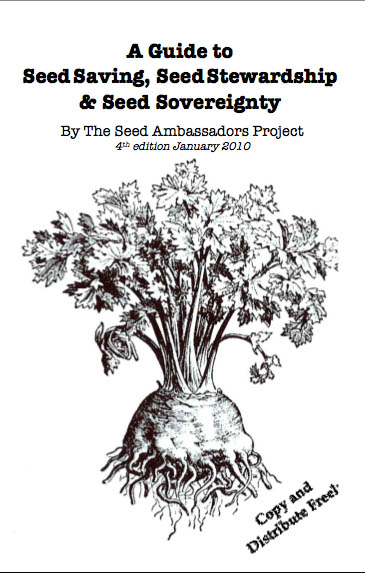
Here is the 4th edition of our Seed Ambassadors Project Seed Saving Guide.

“A Guide to Seed Saving, Seed Stewardship & Seed Sovereignty”


Seed Saving Zine 4 hand out (3.8 MB PDF) This hanout formated version is your best choice for printing and reading if you do not have one of those fancy zine staplers.

Seed Saving Zine 4 duplex (3.5 MB PDF) This zine formated version is for printing in a duplex printer and folding into a Zine. That is why the pages seem to be in a wierd order. If your printer does not have duplex ability you can print it one page at a time, flipping each page over to print the back side.

Seed Saving Guide 4th edition

If you would rather us send you a copy that we have printed, please send us $4 to cover printing costs and to help support the Seed Ambassadorts Project. You may also order a copy along with your seed order here at this site under the Books category. If you want to order a bunch of copies for a saving workshop you are teaching, contact us and we will send you what you need for what it costs us to print them.

Enjoy your seed saving adventures

4 Comments on Jan 12th 2010

The Seed Ambassadors Project has moved to our own (leased) farm outside of Brownsville, Oregon.

With more space and time available for seed stewardship, we plan to continue our work with preserving rare varieties of food crops. We will deepen our focus on finding and developing varieties appropriate for year-round gardening in the maritime Pacific Northwest, and, of course, save and distribute seeds.

We also started a seed company earlier this year. Go to our website at www.adaptiveseeds.com to purchase Seed Ambassadors Project varieties and increase the diversity in your garden.

Below are some photos from last week’s cold snap — frozen cover crop, pond, and barn at sunrise.

1 Comment on Dec 20th 2009

Hello everyone,

The 10th annual Food Not Lawns Fall Seed Swap will be on Sunday, November 22.

The event is free and will be at the World Cafe at 449 Blair Blvd. in Eugene, from 1pm-5pm.

Build community by sharing surplus harvest bounty with
your friends and neighbors at this annual event.

Bring your seeds, plants, canned goods, brews,
tinctures, food, instruments, friends, or just
yourself!

Don’t forget envelopes or other containers for the seed you take home with you.

——————————and—————————————————————–

This Sunday, November 8, the Seed Ambassadors Project will be part of a neighborhood seed swap in the Bethel area of Eugene. 2pm – 6pm at the Petersen Barn, 870 Bertnzen Road, Eugene, Oregon.

This event is the culmination of the first year of activity for the Tree By Tree project, which cares for and harvests from mature fruit trees in the neighborhood. It is all free with lots of hands-on activities for adults and kids.

We hope to see you at one of these great events!

Nick shares samples of storage apple and pear varieties at last year's Food Not Lawns Fall Seed Swap

No Comments on Nov 5th 2009

Want to know more about how to save and process seeds from the plants on your farm or home garden? Check out our step-by-step instructional videos on our new YouTube channel:

http://www.youtube.com/user/SeedAmbassadors

We have Sarah starring in a short video on how to save and process mustard seed, a strategy which can also be used on other Brassicas.

We also have a short of Andrew demonstrating tomatillo techniques for a captive audience during a live seed saving workshop at Skinner City Farm in Eugene. The demo shows how to save seed from tomatillos, a process which can also be use on eggplants.

Subscribe to our seedy YouTube channel to be notified about all newly posted videos. Thanks for tuning in!

No Comments on Sep 12th 2009

This upcoming weekend is the Eugene Permaculture Guild’s annual Gathering/Conference. Three days of great workshops, with the theme of Meeting Our Needs Closer to Home.

We will be facilitating a conversation on Creating a Local System of Seed Stewardship on Sunday at 11:15.

The full list of workshops and schedule are available here. More details below.

Elka White Seeded Poppy

Elka White Seeded Poppy

Read the rest of this entry »

No Comments on Aug 25th 2009

An announcement from Nick Routledge, Seed Ambassador and volunteer nurseryman:

This Friday (Aug. 28th) and next Friday (Sept 4th), from 10.00 a.m. thru 2.00 p.m., the Community Transitions Nursery will be selling organic veggie starts at the Springfield Farmers Market – on Main Street between 5th and 6th. Their offerings focus on fall, mid-winter and over-wintering vegetable crops, and include many Seed Ambassadors Project varieties. Please see link below for a full listing of varieties.

Kale Coalition Starts
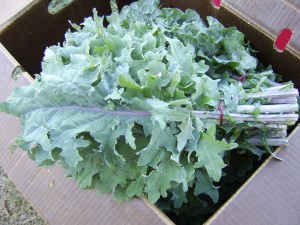
Above photo: Just a few of the variations in The Kale Coalition, an “adaptivar” resulting from crossing up 17 varieties of B. oleracea kales collected on our 2006 – 2007 Seed Ambassador trip to Europe. These starts, and many others, will be available for sale at the Springfield Farmer’s Market as a fundraiser for the Springfield Transitions Garden.
_________________________________________________________________________________________________________________

Anticipating that most gardeners are unused to fall and winter cropping schedules and will have missed the early August transplant window crucial for sizing up most of the mainstay vegetable crops that will feed us through the forthcoming winter, the nursery ‘potted up’ many of these seedlings into 4” pots to grow them on, in past weeks. Transplanted into your gardens within the next couple of weeks (there is still time to prepare ground), an array of these thriving plants will feed you October thru May – the eight month period making up the longest ‘harvest season’ of the year. For those of you as yet unsure about the wherefores of fall, mid- and over-winter cropping, I will be giving a public talk on the subject at this Friday’s market at 12.00 p.m. and will, of course, be happy to answer questions there.

We are quietly confident that no nursery in the PNW currently comes close to offering the diversity and quality of winter food plants we are now making available. Our current selections reflect the results of extensive winter trialing, selection and breeding programs by public domain plant breeders in the S. Willamette Valley working with collaborators throughout the PNW and Western and Eastern Europe, in recent years.

All our transplants are raised in N. Springfield at our nursery (a program of the Community Transitions Program of the Springfield Schools District) by young-adults and adults with special needs, who come to us from Springfield schools and Lane Community College. All proceeds from nursery sales support our greenhouse.

All material offered by the nursery is open-pollinated. Varieties locally stewarded by the Seed Ambassadors Project (SAP) are noted. For cultural information see our fall and winter cropping table.

Please see our list of varieties on offer, here:

http://www.seedambassadors.org/avalon/fall2009offerings.htm

No Comments on Aug 24th 2009

The Seed Ambassadors Project will be giving a Seed Saving workshop this Sunday, August 16 from 1pm – 3pm at the Skinner City Farm in Eugene.

Spinach seed head ready to process

Spinach seed head ready to process

Read the rest of this entry »

No Comments on Aug 13th 2009

UPDATE: New winter Gardening Chart as of January 2011

Big Willamette Winter Garden Chart 4

OUTDATED:

For those that couldn’t make it to the Winter Gardening Workshop in June, here is a link to the ever- evolving Chart for Gardening Autumn through Spring in the Southern Willamette Valley:

brassica love

No Comments on Aug 12th 2009

Over 35 people turned out for the 6th annual Winter Cropping Workshop at Food for Lane County’s (FFLC) Youth Farm in Springfield.

Nick Routledge talks winter croping

Workshop presenters Ted Purdy, FFLC farmer; Andrew Still of the Seed Ambassadors Project; and Nick Routledge provided a wealth of information about the right conditions for growing good tasting and fresh vegetables—roots and greens—all winter long.
Read the rest of this entry »

No Comments on Jul 12th 2009

This Saturday, come learn about growing food through winter in the great refrigerator of the Pacific Northwest.

In this ever-evolving workshop we will discuss many topics from: when to plant, seed varieties for winter hardiness, and much more.

The 6th annual Winter Cropping Workshop, sponsored by the Eugene Permaculture Guild and Food For Lane County, is scheduled for 3.00 p.m. on Saturday June 20 at the Food For Lane County Youth Farm in Springfield.
Read the rest of this entry »

No Comments on Jun 18th 2009

For everyone within driving distance of Eugene, Oregon, this year’s Spring Seed Swap morphs into a full on Propagation Fair with speakers.

Bring your home saved seed to trade and share in the bounty with the seedy community! Also remember to bring empty envelopes and baggies, there is never enough.

In addition to seeds and starts, this year there is a concerted effort to include fruit tree cuttings (scion). Root stock will be available for a small fee, and help with grafting will also be available.

see a full write-up of the event at the Eugene Permaculture Guild’s website

Please come to the Lane Community College Cafeteria
10.00 a.m. – 4.00 p.m. Saturday, March 14.

Here’s a slide show to get people excited about the 2009 season.

View Slide Show Full Screen

No Comments on Mar 12th 2009

Filed under Thailand

Thailand 2009

This month we took a short trip to Thailand, where we combined family time with my dad (who lives there), with some Seed Ambassadorizing in a small village called Nong Ta Klong in Buriram Province, in the northeast.

View Sideshow in Full Screen
- We recommend changing it to 5 seconds per photo.

On a previous trip to Thailand we had made friends with Loong Yoot, a brilliant and inspirational man whose motto is to “teach by not teach.” Loong Yoot received a scholarship to study Permaculture in Australia many years ago, and has spent the past eight years riding his bicycle around his home country teaching people by example about sustainable living. In a country where most structures are made of resource consumptive wood or cement, he teaches people to build adobe structures for community learning centers and other uses. In a culture where consumerism and materialism are rapidly stripping both rich and poor of their sense of self, he shows that another, simpler way of life is possible and in many ways preferable. Loong Yoot’s workshops bridge the class divide by bringing the rural poor together with elite city folk searching for a new way of life, and enable travelers to develop meaningful connections with people and places in that elusive “off the beaten path.”

The last time we were in Thailand (early 2004), we spent five weeks working and learning with Yoot in a village close to the Cambodian border. This time, due to a limited time frame, we spent only three days.

Po Tongbai, the former village head man of Ban Nong Ta Klong, had already started a bit of a “Center for Sustainable” in this increasingly dry region when he dug three large ponds on his land a few years ago. Some questioned his sanity, but his family and friends now enjoy fresh fish year-round, and his family has a lush, irrigated garden in the dry season. But the invitation to build an adobe structure, to invite people from near and very far away to learn about living a less resource-consumptive life, was initiated by his daughter Noi. Over the course of three weeks, dozens of people will come to Po Tongbai’s land to have fun, make connections, and learn by doing.

In the short time we were there we made many bricks and built two walls of the structure; learned how to make rice noodles in the traditional way; did a teensy bit of gardening; ate lots of delicious food; and gave a seed saving workshop. We brought some international seeds with us to share with the villagers, and in return some of the women in the village walked us around and gave us seed for many beautiful food and flower plants, some of which might even mature seed for us here in Oregon. We are thrilled to grow their authentic Thai holy basil, an edible species of cleome (spider flower), and Loong Yoot’s edible ball-shaped loofa from the northern mountain regions, among others.

No Comments on Feb 21st 2009

« Newer Posts - Older Posts »