Archive for the 'Our Travels' Category

The Vavilov Institute is located in two beautiful old buildings in the main part of St. Petersberg. We were told that the government does not believe the Institute needs to be located on such prime real estate (right next to the Hotel Astoria and other big-money hotels), and so they do not provide them with the funds to maintain the buildings.

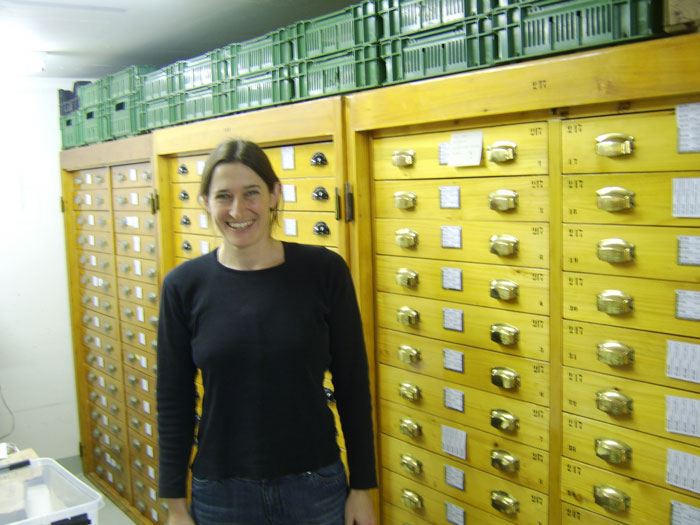
Some of the space of at least one of the buildings is rented out to other businesses and this building, which houses the herbarium and some of the gene bank, as well as many offices, is in the course of renovation — the outside is complete but the inside has far to go. This is the building that we spent most of our time in — it houses Sergey’s office.

sta74133.jpg sta74131.jpg
Left: Sergey Alexanian, our great host. Right: One of many Vavilov Statues.

We had the opportunity, though, to walk across a great traffic circle (the “backyard”) to the Institute’s building on the other side. This building was initially designed to be apartments for nobility (200+ years ago), and some of the interiors were reminiscent of the Hermitage, with gold plating on the walls and frescoes in the halls, and ornately carved ceilings throughout. This is where the Director of the Institute’s office lies, and also where the private Vavilov Museum is located. There are also two great halls capable of hosting at least 100 people for conferences and the like, and also many other offices that we did not see. Our tour of this building began with a walk around to see some of the more impressive rooms mentioned above.

Next we went to the private Vavilov Museum, which consists of several exhibits detailing the achievements of Vavilov as well as those of the Institute. There are maps depicting Vavilov’s Centers of Origin, and maps that show where he himself went on collecting missions over a 20-year period from the 19teens to 1940. The most impressive map, though, is the one that details all of the collecting missions that have been carried out by all staff of the Vavilov Institute over the past 100 years – this map is nearly all marked up, except for locations that are very far north. This is especially impressive when one considers the political situation with Russia for most of that time, and the financial situation now.

sta74109.jpg Vavilov study sta74113.jpg sta74094.jpg
Photos from left to right: Sergey giving us the museum tour, books in Vavilov’s study, map of the institute’s collection missions, N.I. Vavilov.

(more…)

No Comments Sarah Kleeger on Jan 6th 2007

On Wednesday we had the pleasure of taking a tour of parts of the Vavilov Institute. The first stop on our tour was the Herbarium. An herbarium is a collection of preserved samples of plants or plant parts, usually pressed on sheets of paper, for scientists and researchers to view. The herbarium at the Vavilov Institute is home to over 200,000 such samples, collected by Vavilov himself and other scientists on collection missions throughout the world. It was once one of the preeminent herbariums in the world, but now the largest herbariums in France and England house over seven million specimens!

We were very excited to see the herbarium, but also a bit surprised at its condition. Everything was very clean and well organized, but it seemed that funds were deemed to be more useful elsewhere, as the lights were off and the room was lit through the open curtains only (this could be better for the specimens). There was no climate control, and the cabinets and boxes used to store the specimens were quite antique looking. Many aspects of the Vavilov Institute seem to be straight from another time, and the herbarium was no exception.

sta74043.jpg sta74056.jpg
Left: Preparing seeds to give to VIR. Right: The Vavilov Institute.

There were a few people working in the room, examining specimens at their leisure. The coordinator took a few minutes to show us some samples that are kept out as examples of the layout of different types of plants. We viewed samples of a grass and a tree, and observed how they were filed according to species in boxes stacked in row after row of tall wood cherry wood cabinets. One of the samples had the signiture of Vavilov on it — this was a sample that he had actually collected! After sufficient oohs and aahs, we walked down to the office of one of the scientists.

sta74089.jpg sta74087.jpg
Left: Sergey showing us the the Herbarium collection. Right: A specimen collected by N.I. Vavilov in the 1920′s.

We were quite happy to meet the Director of Legumes, Dr. Margarita Vishnyakova. In her office we found petrie dishes with examples of the different species of beans and peas, and a large case filled with different fava bean (Vicia faba) varieties. On her wall were two mosaics made from beans, and on shelves around were giant pods from leguminous trees and branches from different leguminous plants.

(more…)

No Comments Sarah Kleeger on Jan 5th 2007

In 1939 Winston Churchill said “Russia is a riddle, wrapped in a mystery, inside an enigma” and coincidently a short time before we entered the country there was a magazine title story that was called something like, “Russia — Understanding the Enigma” sitting in the window of a German book store. More than 65 years later Churchill’s description is still applicable.

Most of us have some sort of preconceived notions about Russia, and we must admit that we had ours. Our stay in Saint Petersburg was really only enough to add to those a priori assumptions, and as with most countries (and most things in general), we left feeling like we had learned just enough to realize that we haven’t a clue about the country, let alone the city that we called home for eight days.

sta73961.jpg sta73971.jpg sta73975.jpg sta73984.jpg
Photos from right to left: Frozen crust on the River Moyka, The Hermitage, The first tourist pose in a long time, The “Church on Spilled Blood” used as a root cellar but the Soviets.

Our interest in visiting Russia was inspired by the renowned Vavilov Institute (VIR), which is known for housing one of the world’s largest and oldest gene banks. In planning our trip to Europe, the VIR was at the top of the list of places we wanted to go, and after more than a little effort, Nick was able to secure an invitation for us.

We had the unique circumstance of arranging a visit to Russia that bridged the first two weeks of the New Year, with an arrival of January 4 and a departure of January 12. In arranging our trip, Sergey Alexanian, a Vice Director and the Foreign Relations specialist at the Vavilov Institute, had mentioned “the holidays,” but I assumed he was referring only to the couple of days on either side of the weekend of January 6-7, the Eastern Orthodox Christmas. Like with many assumptions, I was very wrong.

sta74081.jpg
Portrait of N.I Vavilov

(more…)

No Comments Andrew Still on Jan 4th 2007

Latvia for new year’s eve was a bit more drunken than our other new year’s spent traveling, when we were in Malaysia (2003-04). A few thousand people gathered under the Freedom Monument in the central part of Riga, danced in the street to pop music courtesy of a live DJ, and oohed and aahed at fireworks exploding directly overhead, closer than I have ever seen them. We were in Latvia for about five days, but most of this time was New Year’s holiday celebrations, and so our opportunities for meeting with seed related contacts were minimal.

sta73877.jpg sta73874.jpg sta73832.jpg

Photos Left to right: Powerful statues outside the Latvian Occupation Museum, Beautiful Old town Riga, The liberty Statue (where people where once thrown in jail for putting flowers at its base).

Our first impressions of Latvia seemed to indicate that this country was much more economically developed/ “successful” than Lithuania, judging only by superficial views of the size and glitz of Riga compared to Vilnius, the amount of English speakers, and the general cosmopolitan feel of the city. Because of these opinions, we were expecting the Organic scene here to be more mature than in Lithuania, but we learned that in many ways Latvia is on par with Lithuania, and in some ways has further to go in developing organic agriculture, seeds, and markets.

We had the luck of arranging a last-minute visit with Dr. Livija Zarina of the Priekuli Plant Breeding Institute, about a two hour bus ride north east of Riga. The work at the Institute, whose logo is a potato flower, is focused almost entirely on field crops. The state institute of Priekuli owns 286 hectares and grows on an additional 100 hectares rented from neighbors. The six departments at Priekuli include potato, barley, tritcale and rye breeding programs, agrotechologies, seed production of field crops, and a tissue culture lab. They have also managed a small organic experimental field for many years now, which Dr. Zarina counts as one very important aspect of Priekuli, “We are really rich. Not many places have this, but in ours, it exists.”

sta73999.jpg sta73922.jpg sta73900.jpg sta73913.jpg sta73901.jpg

Photos right to left: Dr. Zarina our host at the Plant Breeding Station, A beautiful Potato flower for a logo, Display of their pea breeding accomplishments, Short term seed storage, Latvia’s main organic certification office.

Dr. Zarina is the Head of the Agrotechnology Department, and her work is focused mostly on canola. She is also involved in an intensive study that, for at least the past ten years, has been trying to establish a system of crop rotation that is beneficial for fertility needs of organic production of Latvia’s main field crops of rape, rye, barley, peas, and a few others. The experiments are evaluating six fertilizing schemes and soil management practices with 11 different crop rotations.

(more…)

1 Comment Sarah Kleeger on Jan 3rd 2007

Don’t criticize it, certify it! ORGANIC Lithuania.

dscf2285.jpg dscf2290.jpg sta73595.jpg
L to R: 1. A view of some of the Organic Certification paperwork, including the three colors of certificates: Red and yellow for the first two years of transition to OG, and green for fully Organic. 2. Kayla looking at some documents with the head of the Lithuania Organic Certification agency. 3. The shelves and folders of the Certified Farmers (unfortunately only a few seed growers).

After learning about the paperwork we when to a small special organic farmers market.

dscf2295.jpg dscf2301.jpg dscf2300.jpg dscf2304.jpg dscf2308.jpg
L to R: 1. The Kaunas Organic Farmer’s Market. 2. Some local produce (apples, beats, parsnips sunchoke!, Rutabagas!, cabbage, squash, parsley, onions, potatoes, and some little yellow Lithuanian quinces). 3. Herbal teas that can be mixed special for your own needs. 4. Grains and the first OG kids cereal in LT. 5. Collecting some LT grain and caraway accessions.

(more…)

No Comments Andrew Still on Jan 2nd 2007

Thursday began with a drive out to the countryside for a visit at the Lithuanian Institute of Horticulture. We were welcomed by Dr. Rasa Karkleliene, Head of Vegetable Breeding Sector and Scientific Officer, and Dr. Adrius Sasnauskas, Vice-director of Science for the Genetic and Biotechnology Department (!).

We gathered in the board room and watched a very professional video explaining the size and scope of the Institute, with images of some of their over 400 hectares of idyllic apple and pear orchards, biotech labs, and delicious-looking (GE!) strawberries. The Institute is involved in every aspect of food science, from variety development to processing all in one place. They are funded only 30% by the Lithuanian government, with other funding sources coming from the EU or companies such as Syngenta (the giant biotech/chemical multinational corporation). Go here to see how Syngenta and Monsanto work together. This year the Horticultural Institute began their first organic plot – two hectares for organic variety development.

sta73425.jpg dscf2154.jpg sta73424.jpg

Photos, from left to right: 1. The Lithuanian Institute of Horticulture; 2. In the meeting in the board room, talking about SAP and learning about what happens at the Institute; 3. Dr. Rasa Karkleliene and a colleague taking samples of some of our varieties.

After learning about who and what we were up against, we gave an overview of our project and Andrew presented the slide show, which by this point was smooth as silk, and talked a little bit with the Doctors, who were extremely friendly and very interested in our project. Not one word was mentioned about our differing philosophies of plant development, and it was nice to have conversations with actual biotech scientists, because despite our obvious differences in methods (and world view), they are working for the some of the same things we are: superior vegetable varieties.

(more…)

No Comments Sarah Kleeger on Dec 29th 2006

Wednesday morning began with a three hour meeting at the headquarters of the Chamber of Agriculture, arranged by Edita Karbauskiene, with about 30 organic farmers (from large farms to hobbyists), professors, members of the Chamber of Ag., and members of the press represented. The meeting was scheduled for three hours, and despite worries that we wouldn’t be able to fill up that time, the time needed for translations and seed swapping activities extended things to a record-braking four hours!

Keeping our spiel interesting and relevant for such a diverse group was somewhat difficult, but also rather fun. We began with a discussion of the Seed Ambassadors Project, then talked about the seed scene in the other countries we have visited, focusing on ideas that could be beneficial to the organic seed scene in Lithuania. Because certified organic seeds are slim pickin’s in Lithuania, we found ourselves promoting that the farmers exchange seeds amongst themselves, and described specifically the Seed Savers Exchange (SSE) model. Many people seemed to embrace the idea for their own personal gardens, but the SSE model doesn’t work for farmers, who need to cite certified sources for their seeds.

dscf2006.jpg dscf2036.jpg sta73384.jpg sta73388.jpg
Photos, from left to right: 1. and 2. Sarah, Kayla and Andrew sharing seeds and discussing varieties with some atendees of the meeting at the Chamber of Agriculture. 3. Andrew receiving Lithuanian Walnut seeds, with translation help of Edita. 4. Some of the meeting participants checking out and divying up their seeds.

We learned from this meeting that in some ways, Lithuania is a few steps ahead of the US as far as facilitating farmers’ access to Certified Organic Seeds: a Chamber of Agriculture sponsored database of Lithuanian Organic Varieties is in the works, and already enough information has been compiled to assist farmers in their quest of OG seeds. We referred people to the Organic Seed Allicance’s Seed Producers Database, still in its infancy, for comparative purposes. (Another American organic seed database can be accessed at the Organic Materials Review Institute site.) (more…)

No Comments Sarah Kleeger on Dec 27th 2006

The organic scene in Lithuania is still in its relative infancy compared with that of Germany or the US. Though government affiliated Organic Certification began in Lithuania in 1993 (with nine farms certified), entry into the EU in 2004 brought on a new and different set of organic regulatory laws. The Lithuanian Chamber of Agriculture has played a key role in helping farmers keep pace with these laws, but in a country whose organic industry is so young, many of the regulations are somewhat difficult to follow.

If an organic farmer wants to grow organic seed for sale, s/he must obtain a seed certification in addition to the standard organic certification. As of 2006, only about 20 farmers in the country have this certification and all but one of them grow only grain.The single grower that produces vegetable seed is contracted to Institute of Horticulture for growouts of some of their crops (carrots and onions especially), which are then sold commercially (mostly to gardeners) by the Institute. Grain accounts for 69% of the organic ag. production here (most of the rest in fodder or sugar beets), with only 0.1% in vegetables, so the country’s need for certified organic vegetable seeds for farm use is pretty small.

One of the goals of the Chamber of Agriculture is to increase the amount of organic vegetable production in Lithuania, but the market for organics is small here and there are no marketing boards to help the farmers sell their produce. Also, most farms are pretty small by production standards and the farmers can’t produce enough to satisfy a grocer’s demands, let alone meet export quantities to reach developed markets. Organic vegetable growers would then have to rely on the local markets, where consumers will pay a price premium on some products but not others (see: http://www.vic.lt/ris/index.php?id=12933&action=more.
for recent prices of organic crops in Lithuania).

(more…)

No Comments Sarah Kleeger on Dec 27th 2006

We arrived in Vilnius, Lithuania on Sunday night and secured lodging at a hostel. Monday morning Andrew and I began our quest for Russian Visas – a process that took a day longer than planned at considerable more expense than we imagined. Because of the visa delay, we were forced to cancel our first appointments in Kaunas with the woman that made it happen for us in Lithuania, Edita Karbauskiene, ecologist (her title) and “Lithuania’s Angel of Organic Farming” (my title for her) for the Lithuanian Chamber of Agriculture.

However, we did get to see Vilnias by night. This included some beautiful old town architecture, a Frank Zappa memorial and the pseudo-independent Republic of Uzupis (a quaint neighborhood of artists, hippies and drunks). Uzupis has a great Constitution posted on a wall for everyone to see. It includes “Everyone is free to be free and everyone is free to not be free if they choose”. It seemed like beautiful tax-paying anarchism to me.

sta73315.jpg sta73289.jpg sta73313.jpg sta73312.jpg sta73324.jpg sta73327.jpg dscf1933.jpg

Over the course of the next two and a half days of meetings, we got an amazing survey of the organic and seed scene in Lithuania. What will follow is a brief summary of what we learned.

No Comments Andrew Still on Dec 26th 2006

Our plans for Poland on the 9th of December fell through, and so we found ourselves in Hamburg with lots of options but no plans. We did what we could to pursue new seed-related contacts, even recruiting the help of Christina and Juan, but we found last-minute arrangements around the holidays to be somewhat difficult in Germany.

We wound up staying in Hamburg until our December 17th flight to Lithuania, mostly exploring various parts of the city and lying low.

e2sta73030.JPG e1sta73025.JPG sta73077.jpg sta73086.jpg sta73096.jpg sta73114.jpg sta73179.jpg

One of the contacts Christina pursued for us worked out, and so we spent a delightful afternoon with Karl-Josef Muller, the head of the Association for Biodynamic Plant Breeders, and his fellow cereal breeder Martin Timmermann. Karl Joseph has been breeding for high quality grains in low fertility, low-input organic systems since 1986, and has developed and registered a variety of “naked” barley, Lawina, on the EU’s common catalogue. Take a Look at their website “Cereal Breeding Research Darzau” it contains a lot of great information.

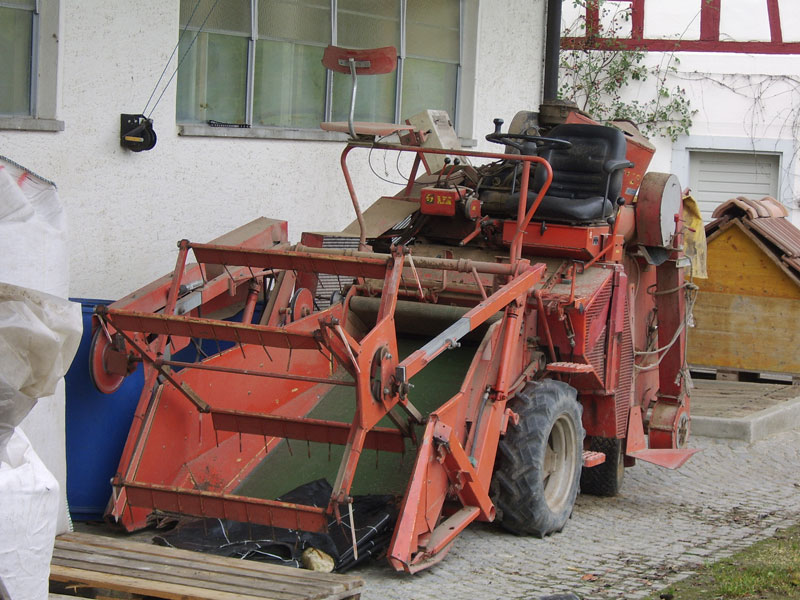
We first checked out of some of their “nursery” plots and grow-out fields of fall-planted rye, spelt, einkorn, and barley on neighboring organic and biodynamic farms. Then we returned to the research center to see some of the specialized equipment (including custom tractor and special de-hulling machine), and then retired to their offices for coffee and a long discussion of the methods and whys and wherefores of organic grain breeding.

Karl-Josef told us, “Our aim is to develop new varieties, but it does not end there. It is also to develop new ideas for new varieties and to research and tell others (even the conventional breeders) what we have learned. Because if the idea is developed, sometimes that is enough for now. The market/interest (in organically developed seeds) is very small, but it is not our job to improve this. What is important is to develop new criteria for farming, organic farming, human being, these ideas.”

sta73099.jpg sta73109.jpg

It was a wonderful visit, and we left with a few new varieties of grains (Lawina naked barley and a light grain rye), and shared with Martin some of the perennial wheat that we had brought. We also left with our heads full of new ideas and information.

No Comments Sarah Kleeger on Dec 18th 2006

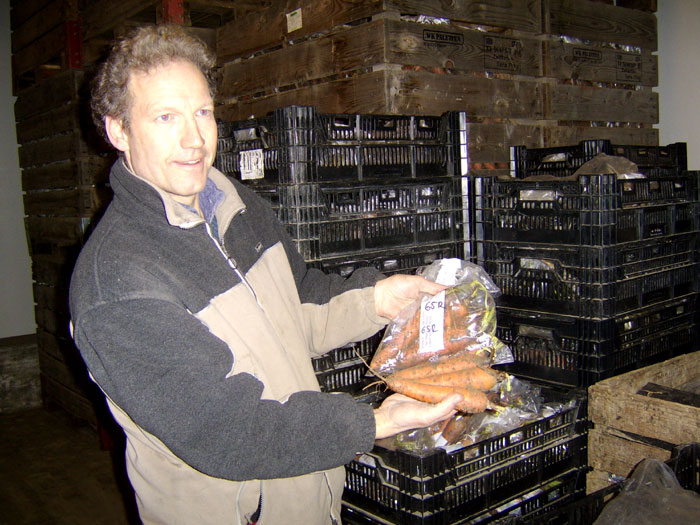
Early morning on Monday, December 4, we arrived at the doorstep of Christina Henatch, a pivotal player in the German Biodynamic seed breeding scene, Working at the Gut Wolfsdorf Farm outside of hamburg Germany. Christina was gracious enough to host us for several days during a very busy time of year for her. We talked about a great deal — from nematodes and flea beetles to the reality of so-called “organic hybrids” now on the market. We participated a bit in the process of selecting carrots for next year’s seed crop, and helped process some of this year’s carrot seed crop.

c2dscf1772.JPG c1dscf1767.JPG b5sta72926.JPG b3sta72930.JPG a6sta73013.JPG

We worked a great deal with Juan Richter, Christina’s knowledgable and helpful research assistant, and had what amounted to a four day seminar in the Biodynamic seed world of Germany.

Christina eagerly accepted many of the seeds that we brought, including the broccoli and beans, which are two of her main breeding crops. She was also excited to pass on some of our seed to her colleagues that work with grains, eggplant, salad greens and more. She shared with us some of her favorite carrots, broccoli, and beans, as well as a “naked barley” and some over wintering spinach, and offered us new contacts to explore in her network of Seedspeople.

a7sta72895.JPG a8sta72924.JPG b2sta72927.JPG

Christina is a part of the oldest and largest cooperative of Biodynamic breeders in the world, Bingenheimer. Bingenheimer is dedicated to developing and promoting open-pollinated varieties for the professional gardener/farmer that are of the calibar to compete with and surpass hybrid varieties. It is a pivotal time in the evolution of the seed business, especially considering the introduction of “organic hybrids,” and the German Seed Initiative, comprised of dozens of dedicated seed breeders like Christina, is the only organization taking a pro-active stance to ensure that market gardeners will continue to have access to increasingly high-quality open pollinated varieties.

a1sta72942.JPG a4sta72944.JPG a3sta72951.JPG a6sta72890.JPG

a2sta72949.JPG a5sta72881.JPG

We hope to visit Bingenheimer later in our journey, but for now stay tuned for some photos of the Gut Wulfsdorf farm and our experiences here.

b1sta72872.JPG

No Comments Sarah Kleeger on Dec 8th 2006

Sounds a bit like The Middle Ages and knights and all that, and really that´s not too far off…

Thursday morning, November 30, we left for Barritskov, a manor house also on the East Coast of Jutland with 600+ hectares of Biodynamic forage crops and vegetables, and a sizable herd of beef cattle. Barritskov is also the home base of Aarstiderne (Danish for the four seasons), a “box scheme” that imports organic foods from all over the world and delivers any of nine different produce boxes, as well as a variety of specialty boxes (meat, dairy, fish, wine, etc.) to the doors of over 30,000 households in Denmark and now Sweden.

sta72749.JPG sta72835.JPG

We took a tour with Chris Russel, the long-time renaissance man of the business and an American that has lived and worked in Denmark almost twenty years. He arranged for us to stay in the “gardener’s house,´´ a two-hundred year-old four bedroom home with a thatched roof, that is sometimes used by the president of the company but is in the process of being converted into a guest quarters. We were the first guests to stay here and felt quite lucky to be treated so well.

We met with Chris again on Friday, and had a good conversation about our project and the project there at Barritskov. Chris even videoed an interview of us for the company´s VLOG!

sta72768.JPG sta72756.JPG

We gave Chris seeds (that he promised to increase) for their experimental garden, and he gave us access to boxes and boxes of Seeds of Change seeds from a 2002 trial garden they did for SOC. We were quite delighted for this gift, which included a few varieties that Seeds of Change doesn´t offer any more and we are excited to bring back. Most of the seeds are not on the EU Common Catalogue, so we took some seeds that we thought people might be interested in further down the line.

Barritskov was a wonderful place and while we were there we had the opportunity to explore the forests and coastline, and also walk to the town nearby. It was a great snapshot of the Danish countryside, and a much better seed contact than we had imagined.

tdscf1713.JPG

No Comments Sarah Kleeger on Dec 7th 2006

From West Jutlands High School we traveled by bus to the city of Arhus, and then on to The Organic Agricultural College or Den Økologiske Landbrugsskole på Kalø near Rohne. This school, besides being a foreign language “high school”, also offers a three year certificate in Organic Farming, and trains about sixty students per year in organic grain crops, pigs, or cows for dairy or meat. Kristian, the school’s principal, took us on a tour of the campus. The fields of Brassicas as a catch crop, functioning dairy, and marsh sewage treatment plant treating all of the schools wastewater were only some of the great projects the school was involved in. Students attend classes for five months, then have twelve months of on-farm experience, then another six months of class work. They must already have at least one year farming experience before they can be accepted to the school, and the program is, essentially, free. The certificate earned by the end of the program is somewhere between an associate’s degree and a bachelor’s degree, and a person must have one of these certificates if they want to buy a farm that is more than thirty hectares in Denmark.

sta72709.JPG sta72656.JPG dscf1521.JPG

We attended two international classes — about half of the student body is from Eastern Europe, mostly Poland, Bulgaria, and Ukraine, with the other half from Denmark. The International classes are all in English. The first class we attended was a lecture in a unit about crop rotation for first term students. The crops in question were mostly large area commodity crops such as sunflowers, canola, rye, spelt, etc. To this class of about seventeen we gave an impromptu lecture about our project. We focused on why we believe open pollinated seeds are important, with issues of food security and biodiversity stressed. We took a detour from the school for the rest of the morning and walked three miles out to “the ruin,’’ a several hundred year old fort on a small island that is connected to the mainland by a man-made jetty. It was quite beautiful, and a nice walk to boot, past a small marina and around an inlet of the bay. Andrew even found some wild yarrow seeds to collect.

(more…)

No Comments Sarah Kleeger on Dec 4th 2006

Birtha Toft, garden manager extraordinaire and member of the Frösamlerne, invited us to stay and work for a few days at Vestjyllands Højskole, “folk high school” where she works. Young people attend these schools of alternative education for six months to a year, usually between what is in the US high school and college. There are “high schools´´ all over the country where people can study everything from theater and art, to fusion cooking, to politics and sustainable living. The “folk high school” offers courses in all of these and more.

The biodynamic garden at West Jutlands High School sta72527.JPG sta72536.jpg sta72544.JPG sta72631.jpg

We exchanged work in the Biodynamic garden for room and board, and ate some of the best food any of us had ever had. We prepared some of the sandy, no-dig raised garden beds for the winter with manure and straw, mulched paths, built up fences, and broke ground to prep new beds for next season. We had a great time with all of this work, and traded some seeds with Birtha to boot!

We also gave a short presentation to the students and faculty of the school about the Seed Ambassadors project. We were able to hook up our computer to a projector so we could share some photos of Oregon, as well as some of the varieties that we brought seed for, including Painted Mountain Corn breeding projects and Kale. Our first formal presentation and it went really well, brought to life thanks to the photos.

During our stay there we also found the time to walk to nearby Rinköbing Fjord, and Birtha took us on an outing to see some amazing sand sculptures depicting viking myths AND the North Sea. A very great experience for all.

sta72566.JPG sta72584.JPG sta72599.JPG sta72617.JPG sta72623.JPG

No Comments Sarah Kleeger on Dec 2nd 2006

At the Frøsamlerne, event in Denmark we met up with Kayla and Amanda Preece, sisters(also from the Pacific Northwest) that have been traveling together checking out the seedscape of Italy since the beginning of November. We will be traveling together through our visit to Lithuania, after which they will return to the US.

Stay tuned for Kayla´s blog posts to find out more about the story in Italy and her take on the Seed Ambassadors Project.

No Comments Sarah Kleeger on Nov 30th 2006

« Newer Posts - Older Posts »